
Wigton appeals over JPS terms holding up solar financing
Reported Oct 23, 2026Quickanomics write-up updated Oct 24, 2026, version 24 min read
Follow the developing storyWigton has appealed to the energy minister as unresolved JPS contract terms block financing for its planned solar developments.
The short version
Wigton has appealed to the energy minister over delayed power-sale terms for 70.53MW of solar projects while retaining a large investment programme.
Power-sale terms block the next stage
Wigton Energy has taken delays over its proposed electricity-sale contract with Jamaica Public Service Company to the energy minister, saying unresolved provisions are preventing financing for 70.53 of planned solar capacity.
The Jamaica Observer reported the escalation on October 23 after Wigton’s annual general meeting. Chairman said the company had met JPS and the Office of Utilities Regulation, or OUR, and written to the minister about the slow process.
Theoc laid out the sequence: execute the , secure financing, then construct the assets. The proposed JPS contract would run for 20 years. A sets the commercial terms for electricity sales and is central to the project’s expected income.
Chief executive said negotiations had lasted longer than anticipated and some provisions were problematic. Wigton was targeting groundbreaking within six months but would not compromise shareholders’ interests to accelerate an agreement. Management did not identify the disputed provisions.
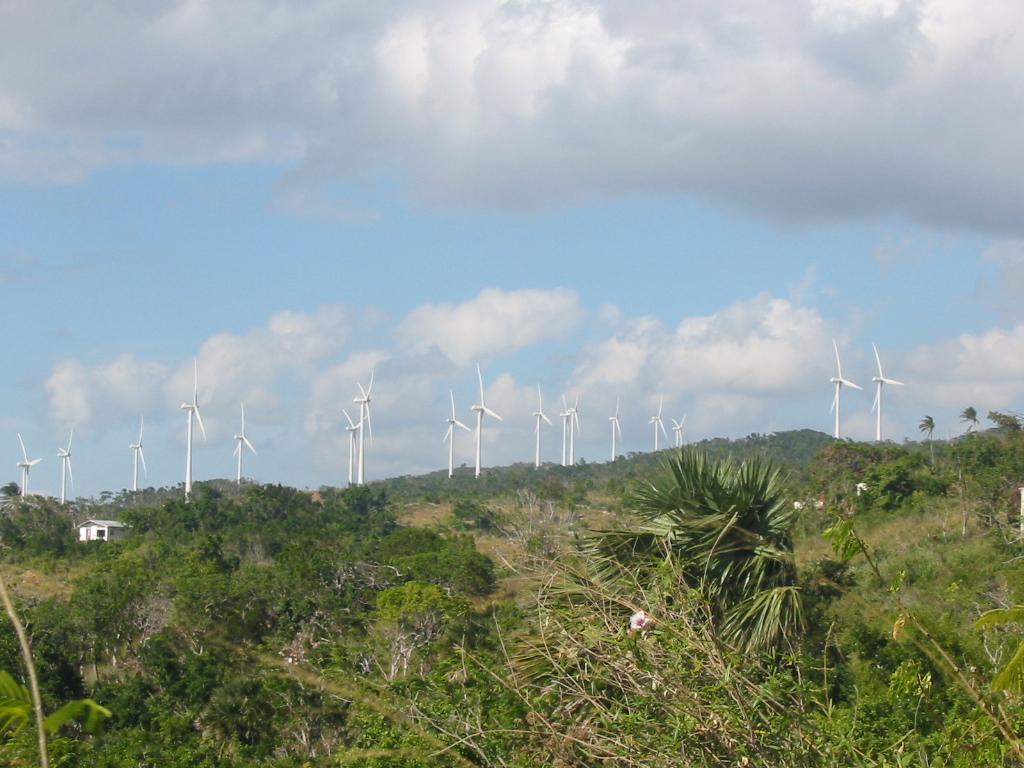
The two leased-land developments were described at the meeting as approximately 50 and 20 . Their combined 70.53- capacity in the September report exceeds the 62.7 of wind capacity Wigton currently operates. These are capacity ratings, not operating additions or electricity already generated.
The Observer said it had reported the agreement completed and submitted to OUR in October 2025. Terms remained unresolved a year later. Wigton said it understood another successful bidder was similarly waiting. Management suggested JPS’s changing circumstances might or might not be connected with the difficulty, without establishing a cause.
An investment budget alongside a remaining
Wigton had J$3.26 billion in cash and equivalents at September 30 after fully repaying A during the month. Total liabilities fell 23.7% from a year earlier to J$3.03 billion; was J$5.81 billion. Equity is the owners’ residual accounting interest after liabilities, rather than another cash account.
Management said it expected at least J$8 billion in over the next two years and could double the company’s size in two to three years. It used that investment programme to explain why it was retaining a substantial cash balance.
The Gleaner’s earlier October 16 account put borrowing down by more than J$800 million, from J$2.7 billion to about J$1.8 billion. Borrowings were around one-third of a J$5.8 billion capital base, against roughly half a year earlier, with cash and equivalents rounded to J$3.3 billion.
The Observer’s later account described the on remaining B as approximately J$1.9 billion, due within the next 12 months, with negotiations on its terms advanced. is the amount owed before interest. Lower borrowing costs were already helping results: half-year finance expenses fell 47.2% to J$81.2 million.
Quarterly recovery sits inside a weaker half-year
Wind production rose 16.6% to 94.7 million kilowatt-hours in the six months ended September, supported by favourable winds, plant maintenance and repairs. Electricity sales increased 13.6% to J$1.51 billion. Unlike of capacity, kilowatt-hours measure output accumulated over time.
Half-year nevertheless fell 11.5% to J$313.6 million from J$354.5 million. declined to J$71.3 million from J$210.1 million, mainly because insurance proceeds and foreign-exchange gains were lower.
Repairs following the hurricanes of 2024 and 2025 added costs, while staff and technology spending lifted administrative expenses. The Gleaner put half-year cost of sales up 21% to J$567.4 million and administrative expenses up 18% to J$506.4 million. fell to 2.85 Jamaican cents from 3.22 cents.
July–September produced a stronger comparison: rose 51.8% to J$144.6 million, with electricity sales up 42.6% to J$726.5 million. The earlier Gleaner report rounded profit growth to 52%, reported quarterly finance expenses down by half to J$38.0 million, and at 1.3 Jamaican cents against less than a cent a year earlier.
Industrial and regional opportunities
Beyond the JPS projects, Wigton is in advanced discussions to supply solar electricity to an unnamed major Jamaican industrial business. Management did not disclose that project’s size, but said its wider commercial-and-industrial pipeline included 10 that could be executed over two to three years. The earlier Gleaner account identified approvals and definitive agreements as outstanding conditions.
The company has also been shortlisted for upcoming Caribbean requests for proposals. It has not identified the markets or potential project sizes. The earlier report said it planned to bid in an upcoming local solicitation from the Generation Entity.
Barrow said regional expansion would involve strategic partners and reduce dependence on a single market. His ambition is to make Wigton the Caribbean’s largest provider; financing and final commercial agreements remain essential steps for the solar projects now under discussion. These opportunities remain in , the process of soliciting and awarding contracts.
Understand this story
Follow an electricity-sale contract through investment spending and distinguish planned capacity from produced energy.
- Power-purchase agreement
The proposed 20-year JPS contract sets electricity-sale terms; Wigton says it must be signed before financing.
- Capital expenditure
Wigton plans spending on long-lived assets, rather than treating its cash as surplus to the expansion programme.
- Electricity power and energy
Megawatts measure intended generating capacity; the half-year kilowatt-hours measure actual electricity output.
Sources and reporting notes
- 1. Jamaica ObserverWIGTON’S SOLAR SNAG (opens in a new tab)
- 2. Jamaica GleanerWigton Energy slashes over $800 million in debt ahead of solar push (opens in a new tab)
What remains unclear
Which contract provisions remain disputed, and when will an agreement acceptable to Wigton and its lenders be signed?
Which sources support each point?
Wigton Energy told shareholders at its annual general meeting that unresolved power-purchase agreement terms with Jamaica Public Service Company (JPS) prevent financing for its solar developments. Chairman Dan Theoc said it had met JPS and the Office of Utilities Regulation (OUR), and written to the energy minister about delays.
The Observer reported October 23, 2026 that the two leased-land solar developments were described as approximately 50 megawatts and 20 megawatts; the September interim report put combined capacity at 70.53 megawatts, compared with existing wind capacity of 62.7 megawatts. The proposed JPS power-purchase agreement would run for 20 years.
Chief executive Gary Barrow said some provisions were problematic, negotiations took longer than expected and the company would not compromise shareholders’ interests while aiming to break ground within six months. The disputed provisions were not identified. Theoc said an executed PPA must precede financing and construction.
The Observer said it had reported the PPA completed and submitted to OUR in October 2025, but a year later terms remained unresolved. Wigton understood that the other successful procurement bidder was also awaiting an agreement. Management suggested uncertainty at JPS might or might not be connected with the delay; no cause was established.
At September 30, 2026 Wigton held J$3.26 billion in cash and equivalents after repaying Bond A during the month. Total liabilities fell 23.7% from a year earlier to J$3.03 billion; shareholders’ equity was J$5.81 billion. Management planned to spend at least J$8 billion on expansion over the next two years and said the company could double in size over two to three years.
Wigton was in advanced negotiations on remaining Bond B terms. The Observer described its principal at approximately J$1.9 billion, due within the next 12 months. Half-year finance expenses fell 47.2% to J$81.2 million, cushioning higher operating costs and lower other income.
For the six months ended September 2026, wind production increased 16.6% to 94.7 million kilowatt-hours, supported by favourable winds, maintenance and repairs. Electricity sales rose 13.6% to J$1.51 billion. Net profit fell 11.5% to J$313.6 million from J$354.5 million.
Other income fell to J$71.3 million from J$210.1 million, mainly because of lower insurance proceeds and foreign-exchange gains. Repairs after the 2024 and 2025 hurricanes raised costs, and investment in staff and technology increased administrative spending.
For July–September 2026 net profit rose 51.8% to J$144.6 million and electricity sales rose 42.6% to J$726.5 million.
Wigton was in advanced discussions on a separate solar project for an unnamed major Jamaican industrial company; the size of that individual project was not disclosed. Management said its wider commercial-and-industrial pipeline included 10 megawatts executable over the next two to three years.
Wigton had been shortlisted for upcoming Caribbean requests for proposals, without identifying markets or project sizes. Barrow said regional expansion would use strategic partners to diversify its energy business and reduce reliance on one market, and expressed an ambition to become the Caribbean’s largest renewable-energy provider.
The October 16, 2026 Gleaner report put Wigton’s borrowings down by more than J$800 million from J$2.7 billion to about J$1.8 billion after clearing Bond A. It described borrowings as roughly one-third of a J$5.8 billion capital base, versus about half a year earlier, and cash and equivalents at J$3.3 billion. Bond B was due within 12 months.
The Gleaner put quarterly finance expense at J$38.0 million, about half the prior-year figure, and quarterly earnings per share at 1.3 Jamaican cents, versus less than a cent a year earlier. It rounded the quarterly profit increase to 52%, to J$144.6 million, and reported sales up 42.6% to J$726.5 million.
The Gleaner reported half-year cost of sales up 21% to J$567.4 million and administrative expenses up 18% to J$506.4 million. Half-year earnings per share fell to 2.85 Jamaican cents from 3.22 cents. Half-year net profit fell 11.5% to J$313.6 million.
The Gleaner reported regional shortlisting and a plan to bid in an upcoming Generation Procurement Entity local solicitation. The separate commercial-and-industrial project remained conditional on approvals and definitive agreements.
Loading discussion…