
SpaceX catches Starship after orbital flight as booster recovery still falls short
Reported Nov 14, 2026Quickanomics write-up updated Nov 15, 2026, version 13 min read
Follow the developing story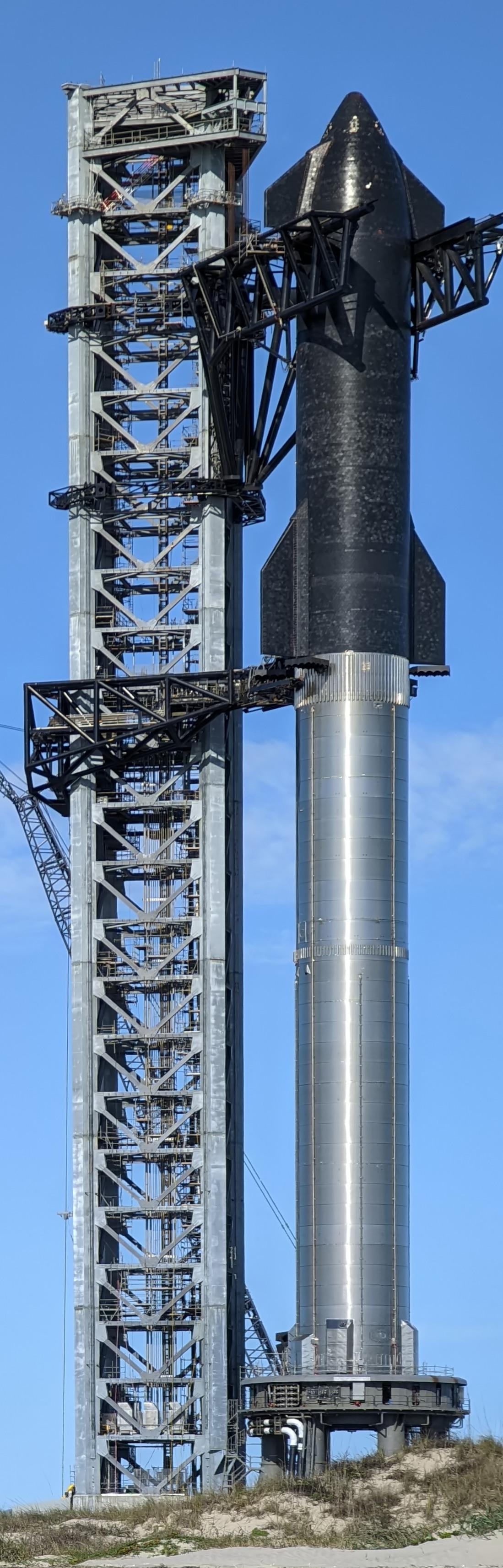
The short version
The first catch of Starship’s upper stage after an orbital flight advances SpaceX’s reuse programme, while a failed booster return and unfinished work limit the result.
A first upper-stage catch after a long flight
SpaceX brought Starship’s upper stage back from orbit and caught it with the Starbase launch tower’s mechanical arms on November 14, a major step towards the company’s goal of a rocket system.
The 52-metre spacecraft completed 14 orbits over 22.5 hours, the system’s longest mission yet, according to Reuters reporting carried by CNA. It had launched from Texas on November 13 atop a Super Heavy booster.
After descending through cloud, Starship reignited engines, turned upright and lowered itself towards the tower. Fittings near the top engaged the mechanical arms as they closed around it, leaving the vehicle suspended above the ground.
The success was confined to the upper stage. Super Heavy failed to return to the launch pad about 10 minutes after Friday’s liftoff, ending the attempt to recover both parts of the rocket during a single mission.
The flight also carried a commercial payload: Starship deployed 26 Starlink satellites at about 260 kilometres altitude on Friday night. An engine firing over the Pacific initiated Saturday’s reentry, as the vehicle slowed from roughly 17,000 miles per hour.
and SpaceX engineers began inspecting the ship within hours of the catch. said Ship 42 looked good, while company flight commentary celebrated the recovery as a major milestone.
The remaining gap between recovery and repeat flight
wants Starship to operate at something closer to the tempo of commercial aircraft, with minimal refurbishment between missions. The company sees the system supporting Starlink, proposed in orbit and longer-term Moon and Mars ambitions.
Recovering hardware is part of that objective, but a vehicle must also be fit to fly again. Reuters reported that Starship’s was not yet . SpaceX is developing new protective tiles intended to need little or no refurbishment after atmospheric reentry.
The distinction separates Starship’s ambition from SpaceX’s existing Falcon 9 operations. Falcon 9 has launched more than 700 times since 2010 and reuses its first stage, while discarding the second stage in the ocean after delivering payloads to orbit.
NASA’s Space Shuttle offers another example of partial reuse. Before its 2011 retirement, the programme recovered the spacecraft but discarded external fuel tanks and required extensive refurbishment before another flight. Returning a spacecraft intact therefore does not by itself establish a quick or inexpensive turnaround.
Lunar ambitions still require work in orbit
Reuters reported that SpaceX had spent more than US$15 billion developing Starship. NASA had provided US$3.2 billion under a contract valued above US$4 billion, awarded in 2021 to use Starship for Artemis lunar missions.
NASA expects crewed Moon flights involving Starship and Blue Origin’s developing lander in 2028, although both vehicles still face difficult development milestones.
For Starship, a central remaining task is : transferring fuel between tanker vehicles in space so the lunar vehicle can travel beyond Earth orbit. The upper-stage catch advances recovery, while that separate capability remains to be demonstrated for the Moon mission.
Understand this story
Separate recovering flight hardware from making it ready for reuse, then understand the different task of supplying fuel in orbit.
- Reusable launch system
A rocket system designed so its major flight stages can be recovered and used on later missions, with the scope of reuse depending on the design.
- Spacecraft heat shield
A protective system that limits the heat reaching a spacecraft’s structure and contents during passage through an atmosphere.
- Orbital refuelling
Transferring propellant between spacecraft in orbit so a receiving vehicle can carry out later parts of its mission.
Sources and reporting notes
- 1. Channel NewsAsiaReuters via CNA: SpaceX Starship returns to landing pad from orbit (opens in a new tab)
What remains unclear
When SpaceX will demonstrate recovery of both stages on one mission and the orbital fuel transfers needed for its lunar plans.
Which sources support each point?
SpaceX’s 52-metre Starship upper stage returned to Starbase in Texas on Saturday, November 14, 2026 and was caught for the first time by the launch tower’s mechanical arms after 14 orbits and 22.5 hours in space. It reignited engines to turn upright and descend, with fittings near its top engaging the arms. The rocket had launched on Friday, November 13.
The Super Heavy booster failed to return to the pad about 10 minutes after Friday’s launch, preventing the planned recovery of both stages on one mission. The successful upper-stage catch did not establish recovery of the complete system. Reuters said Starship’s heat shield was not yet fully reusable; SpaceX was developing tiles needing little or no refurbishment.
Starship deployed 26 Starlink satellites on Friday night at about 260 kilometres altitude. It fired an engine over the Pacific to begin reentry on Saturday, slowing from about 17,000 miles per hour. Elon Musk and engineers inspected it within hours; Musk said Ship 42 looked good. Company flight commentary celebrated the catch as a major milestone.
Falcon 9 had launched more than 700 times since 2010; its first stage is reusable but its second stage is discarded into the ocean. Musk’s goal for Starship is aircraft-like repeat use with minimal refurbishment, supporting Starlink, proposed orbital data centres and ambitions for the Moon and Mars. The Space Shuttle, retired in 2011, reused its spacecraft but discarded external fuel tanks and required extensive refurbishment.
Reuters reported more than US$15 billion spent by SpaceX on Starship. NASA had provided US$3.2 billion under a contract worth more than US$4 billion, awarded in 2021 for lunar missions under Artemis. NASA expected Starship and Blue Origin’s developing lander to begin crewed lunar flights in 2028, with difficult milestones remaining for both. Starship still needed to demonstrate complex fuel transfers between tanker vehicles in orbit for travel to the Moon.
Loading discussion…