
DMart sales rise faster than profit as quarterly margins narrow
Reported Oct 10, 2026Quickanomics write-up updated Oct 12, 2026, version 14 min read
Follow the developing story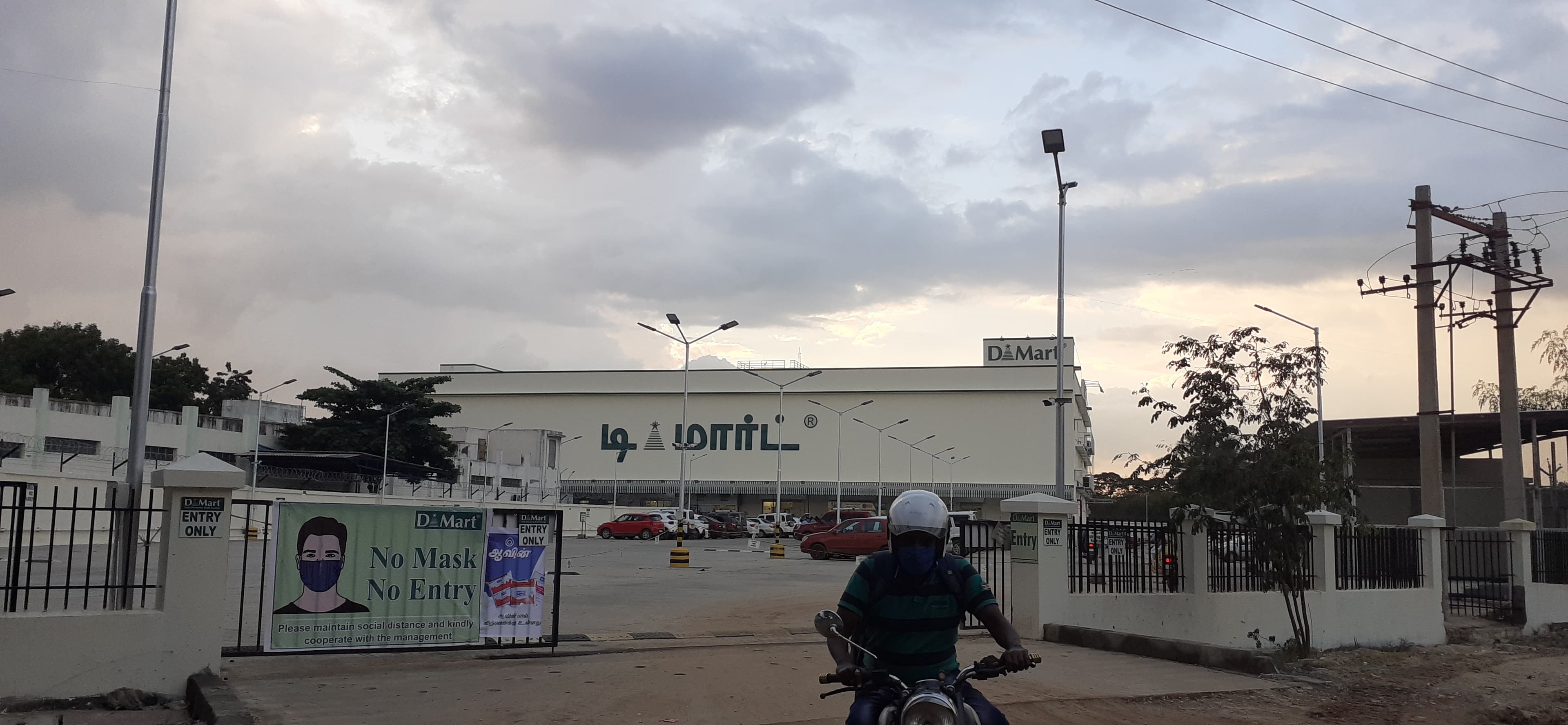
The short version
sales rose 17.8% and 8.5% in the September quarter. improved while management reported higher entry-level wage costs.
Profit growth trails
Avenue Supermarts, which operates India’s DMart supermarket chain, increased quarterly and while its narrowed, according to results announced on October 10.
from operations rose 17.8% to INR 19,644 in the July-September 2026 quarter, from INR 16,676.30 a year earlier, Moneycontrol reported. rose 8.5% to INR 742.98 from INR 684.85 . The company’s press release rounds the profit figures to INR 743 and INR 685 .
The quarter ended September 30 and is the second quarter of the company’s financial year. All amounts are in Indian rupees, expressed where indicated in , a unit equal to ten million.
increased to INR 1,393 from INR 1,214 . The measure excludes interest, tax, . Its fell to 7.1% from 7.3%, while the declined to 3.8% from 4.1%. Basic increased to INR 11.40 from INR 10.53.
The figures describe how much of is represented by the relevant earnings measure. and profit can both rise while the profit share falls, as happened in these results. also differs from because it excludes the financing, tax and asset-cost charges that its name identifies.
earnings and the cost picture
On a basis, covering Avenue Supermarts itself, grew 18.4% to INR 19,206 from INR 16,219 . rose 14.1% to INR 1,403 from INR 1,230 . increased 7.6% to INR 804 from INR 747 .
The declined to 7.3% from 7.6%, and the to 4.2% from 4.6%. Basic reached INR 12.32, compared with INR 11.47. figures combine the parent with its , so they cover a different set of operations from the account.
Moneycontrol reported that total expenses increased 18.3% to INR 18,632.70 . Total income, which includes alongside from operations, rose 17.7% to INR 19,657.54 . Total income and from operations are therefore different measures in the quarterly account.
Managing director and CEO attributed a marginal increase in to wage among entry-level staff. He said DMart’s pricing proposition remained strong in an inflationary environment. The company describes its strategy as keeping purchase, operating and distribution costs competitive so it can offer low prices.
Established stores grow faster
said DMart grew 9.5% during the quarter, compared with 6.8% in the corresponding quarter last year. That measure gives a view of growth beyond the contribution from newly opened locations.
The chain added 15 stores during the quarter and 18 during the half year, taking its reported network to 518 stores at September 30. The total includes one Navi Mumbai store currently closed to customers for reconstruction. Its retail business area was 21.4 million square feet.
The Mumbai-based company opened its first store in Mumbai, Maharashtra in 2002. Its assortment includes food, household and personal products, and apparel. Moneycontrol reported that food represented 56.9% of half-year , and apparel 23.62%, and non-food 19.4%. The last category consists of frequently purchased everyday products.
The half-year comparisons
For the half year ended September 30, rose 16.8% to INR 37,550 from INR 32,151 . increased 15.2% to INR 2,930 from INR 2,543 , and rose 10.3% to INR 1,739 from INR 1,576 .
The half-year was 7.8%, down from 7.9%, while its was 4.6%, against 4.9%. Basic increased to INR 26.67 from INR 24.22. This allocates the period’s profit across shares and does not represent a guaranteed distribution to shareholders.
half-year reached INR 38,439 , against INR 33,036 . was INR 2,892 , compared with INR 2,513 , and was INR 1,603 , against INR 1,458 . The declined to 7.5% from 7.6%, and the to 4.2% from 4.4%. Basic rose to INR 24.60 from INR 22.41.
, whole-time director and CEO of Avenue E-Commerce, said the DMart Ready e-commerce business was focusing on operating efficiencies and the customer experience in its existing cities.
Understand this story
Explain why higher sales, higher profit and stronger cash flow are different outcomes.
Sources and reporting notes
- 1. MoneycontrolDMart’s Q2FY27 net profit rises 8.5% to Rs 743 crore, revenue grows 17.8% (opens in a new tab)
- 2. National Stock Exchange of India corporate archiveAvenue Supermarts: financial results press release for the quarter and half year ended September 30, 2026 (opens in a new tab)
Which sources support each point?
Avenue Supermarts announced July-September 2026 earnings on October 10. Consolidated revenue rose 17.8% to INR 19,644 crore from INR 16,676.30 crore, and net profit rose 8.5% to INR 742.98 crore from INR 684.85 crore.
Quarterly consolidated revenue was INR 19,644 crore versus INR 16,676 crore a year earlier. Consolidated net profit was INR 743 crore versus INR 685 crore. Consolidated EBITDA was INR 1,393 crore versus INR 1,214 crore; EBITDA margin was 7.1% versus 7.3%, net-profit/PAT margin 3.8% versus 4.1%, and basic EPS INR 11.40 versus INR 10.53.
Quarterly standalone revenue was INR 19,206 crore versus INR 16,219 crore, up 18.4%. Standalone EBITDA was INR 1,403 crore versus INR 1,230 crore, up 14.1%. Standalone net profit was INR 804 crore versus INR 747 crore, up 7.6%.
Quarterly standalone EBITDA margin was 7.3% versus 7.6%, net-profit/PAT margin 4.2% versus 4.6%, and basic earnings per share INR 12.32 versus INR 11.47.
Half-year standalone revenue was INR 37,550 crore versus INR 32,151 crore, up 16.8%; EBITDA INR 2,930 crore versus INR 2,543 crore, up 15.2%; and net profit INR 1,739 crore versus INR 1,576 crore, up 10.3%. Half-year standalone EBITDA margin was 7.8% versus 7.9%, net-profit/PAT margin 4.6% versus 4.9%, and basic EPS INR 26.67 versus INR 24.22.
Half-year consolidated revenue was INR 38,439 crore versus INR 33,036 crore; EBITDA INR 2,892 crore versus INR 2,513 crore; and net profit INR 1,603 crore versus INR 1,458 crore. Half-year consolidated EBITDA margin was 7.5% versus 7.6%, net-profit/PAT margin 4.2% versus 4.4%, and basic EPS INR 24.60 versus INR 22.41.
DMart added 15 stores in the quarter and 18 in the half year, reaching 518 stores at September 30, 2026. The total includes one Navi Mumbai store closed to customers for reconstruction. Retail business area was 21.4 million square feet.
Anshul Asawa is identified in the October 10 release as managing director and CEO of Avenue Supermarts. He said DMart stores at least two years old grew 9.5% in Q2FY27 versus 6.8% in Q2FY26.
Asawa said the company retained a strong pricing proposition in an inflationary environment and that wage inflation among entry-level employees marginally increased operating expenses. These are attributed management explanations. The release describes a low-cost, low-price approach based on competitive purchasing and operating and distribution efficiency.
Total quarterly expenses rose 18.3% year on year to INR 18,632.70 crore, Moneycontrol reported. Total income including other income grew 17.7% to INR 19,657.54 crore.
Moneycontrol reported the H1FY27 revenue mix as food 56.9%, general merchandise and apparel 23.62%, and non-food fast-moving consumer goods 19.4%. These shares describe the half year, not only the September quarter.
Vikram Dasu is identified as whole-time director and CEO of Avenue E-Commerce Limited, which operates the DMart Ready e-commerce business. He said the business was focused on improving operating efficiency and customer experience within the cities it already serves.
Avenue Supermarts is Mumbai-based and opened its first DMart store in Mumbai, Maharashtra in 2002. It sells food, household and personal products and general merchandise and apparel. EBITDA is explicitly expanded in the release as earnings before interest, tax, depreciation and amortization.
Loading discussion…