
COP31 ends without top-level deal after split over fossil fuels and finance
- Associated PressWhy the failure to reach a major deal at UN climate talks matters as extreme weather worsens (opens in a new tab)
- The Business TimesReuters via The Business Times: COP31 summit leaders urge world to move faster on climate (opens in a new tab)
- Berkeley EarthOctober 2026 Temperature Update (opens in a new tab)
Reported Nov 22, 2026Quickanomics write-up updated Nov 22, 2026, version 23 min read
Follow the developing storyCOP31 ended in Antalya on November 22 without an overarching agreement after disagreements over fossil fuels and finance. Parties advanced some separate decisions.
The short version
The Antalya talks ended without a after disputes over fossil fuels and finance. A separate electricity pledge drew nearly 100 countries.
Fossil fuels split the conference
The two-week United Nations climate conference ended in Antalya, Türkiye, on November 22 without an overarching agreement. The Associated Press reported that governments failed to reach consensus on the main text, or , after disputes over fossil fuels and climate finance. The draft from the Turkish-Australian leadership recalled the 2023 Dubai agreement, which called for a transition away from fossil fuels, without naming those fuels directly.
Ireland’s climate minister said on behalf of the 27-country European Union that it could not accept the omission. Russia and Saudi Arabia wanted fossil fuels kept out of the text. Many countries were willing to accept it as a compromise. The draft backed for some industrial emissions, which also drew objections from governments and advocates concerned about extending the use of fossil fuels.
The AP reported that the final text circulated after 3 a.m. The chair of the African Group, representing 54 countries, challenged the way the group had been treated. COP31 president later apologised. A representative of Azerbaijan announced the impasse while Kurum was absent from that portion of the meeting.
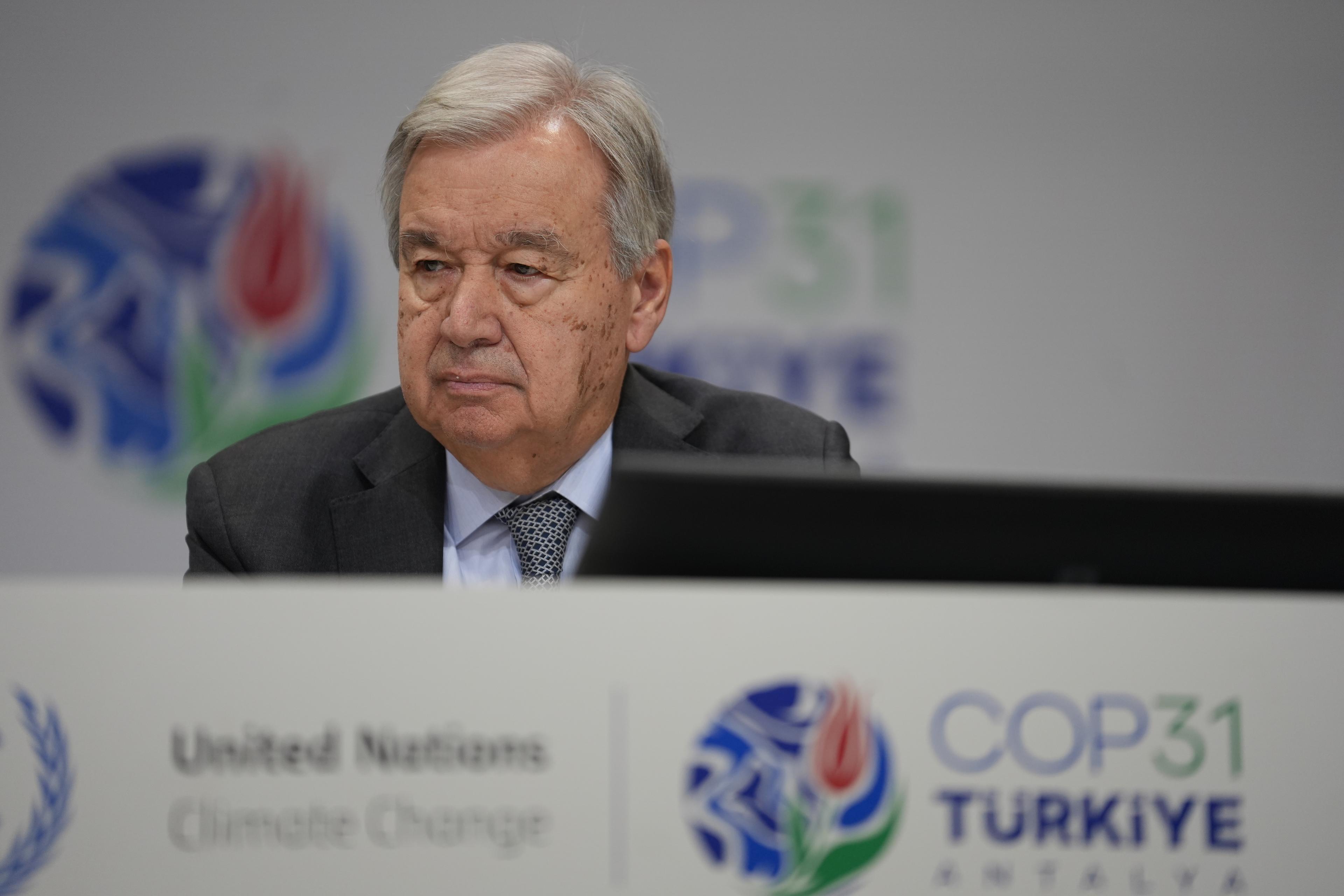
UN Secretary-General expressed disappointment and said dependence on fossil fuels leaves economies exposed to price shocks. Australian climate minister , who led the negotiations, said the Dubai commitment to transition away from fossil fuels was still in force.
The electricity pledge and the next round
The AP reported progress on and on helping workers and communities adjust as economies cut emissions. , the UN’s climate executive secretary, also highlighted the decision on a just transition. Details on financing adaptation for poorer countries, moving away from fossil fuels and gender and climate remain for the next round in Ethiopia.
A parallel pledge drew nearly 100 countries. It aims to increase electricity’s share of final energy use from about 21% to 35% in 2035. That could mean replacing petrol vehicles or fuel-burning industrial machinery with electric alternatives. Reuters reported at the opening that the Turkish presidency had made the target a priority and that campaigners raised concerns about the fuel used to generate the additional electricity.
A warming outlook as energy prices rise
The UN Environment Programme expects the world to pass 1.5°C of long-term warming above pre-industrial levels for a period. It says fast emissions cuts and ultimately some removal of carbon dioxide can limit the duration and extent of that overshoot. The AP cited estimates of 2.7°C to 3°C warming by the end of this century, as a strong added to human-driven warming and the Iran war disrupted world energy markets.
Berkeley Earth estimated that October 2026 was 1.80°C above the 1850–1900 average, its hottest October on record and slightly warmer relative to that baseline than any previous month. It gave 2026 a 97% chance of finishing as the warmest year in its dataset. The ’s temperature aim concerns sustained global warming over a longer period than a month or year.
Understand this story
Read the outcome of the talks alongside the separate changes proposed for electricity use and industrial emissions.
- Climate cover decision
The Antalya cover decision was meant to give the meeting an overarching political outcome. It failed to win consensus.
- Electrification
The separate COP31 pledge aims to raise electricity’s share of final energy use to 35% by 2035.
- Carbon capture and storage
The rejected draft explicitly supported capturing emissions at industrial sites and storing them long term.
Sources and reporting notes
- 1. Associated PressWhy the failure to reach a major deal at UN climate talks matters as extreme weather worsens (opens in a new tab)
- 2. The Business TimesReuters via The Business Times: COP31 summit leaders urge world to move faster on climate (opens in a new tab)
- 3. Berkeley EarthOctober 2026 Temperature Update (opens in a new tab)
- 4. United Nations Environment ProgrammeUNEP: World set to cross 1.5°C global warming, but can still limit, adapt to and return from higher temperatures (opens in a new tab)
What remains unclear
How will countries advance the transition away from fossil fuels and agree on additional adaptation finance in the next round?
Which sources support each point?
The Associated Press reported that the two-week COP31 conference in Antalya, Türkiye ended November 22 without a cover decision after governments split over fossil fuels and climate finance. The draft supported by the Turkish and Australian leadership recalled the 2023 Dubai deal but did not directly mention fossil fuels. The 27-member European Union rejected it, with Irish climate minister Darragh O’Brien speaking on its behalf. Russia and Saudi Arabia wanted fossil fuels left out and many delegations would have accepted the compromise.
United Nations Secretary-General António Guterres expressed disappointment and said fossil fuel dependence worsens climate disruption and exposes economies to higher energy costs. Australian climate minister Chris Bowen, who led the negotiations, said the earlier Dubai commitment to move away from fossil fuels remained in place. The proposed Antalya text expressly promoted carbon capture and storage, drawing objections about over-reliance on the technology.
The AP reported that the final proposal was circulated after 3 a.m., drawing process objections, including from the chair of the African Group on behalf of 54 countries. COP31 president Murat Kurum later apologised. A representative of Azerbaijan announced the impasse while Kurum was absent from that part of the proceedings.
The AP reported that further work on the fossil fuel transition, adaptation finance and gender and climate would go into the next round in Ethiopia. It reported progress on narrower climate adaptation and fair-transition work. The meeting’s separate electrification pledge drew nearly 100 countries and targets a share of electricity in end-use energy of 35% in 2035, compared with about 21%.
The AP reported the prospect of long-term warming exceeding the 2015 Paris Agreement’s 1.5°C benchmark and cited scientific estimates of 2.7°C to 3°C of warming by century’s end. A strong El Niño adds to human-driven warming. The Iran war triggered a global energy shock.
Reuters reported through The Business Times on November 9, 2026 that Türkiye’s COP31 presidency opened the summit with a push to increase electrification to more than a third of final energy use by 2035. Advocates flagged that the pledge did not require the additional electricity to come from low-carbon sources. The final-energy measure refers to the energy actually consumed, including non-electric fuels.
Berkeley Earth assessed October 2026 at 1.80°C above the 1850–1900 average, the warmest October in its record and nominally the warmest month by that measure. It estimated a 97% chance that 2026 will be the hottest year in its record. The long-run Paris temperature benchmark is a different measure from any given month’s or year’s temperature.
The UN Environment Programme’s September 2, 2026 report release said global temperatures are likely to temporarily exceed 1.5°C above pre-industrial levels within a few years. It described deep emission cuts and the removal of some carbon dioxide from the air as elements in a path back toward the threshold.
Loading discussion…